
Craft beer-drinkers have a bevy of options to choose from, so craft beer labels need to shine in order to stand out.
Visuals drive first impressions and perceived quality — but even the most stunning artwork can’t save a label that peels in a cold fridge or fades on a warm shelf. Competition leaves no room for subpar labels when consumers have hundreds of thousands of unique beer brands for comparison. And you can’t rely on just a front-of-bottle label to communicate how your brand is different from the rest.
A cohesive beer labels strategy spans every consumer touchpoint, from your bottles, cans, and kegs to your taps.
At a Glance: Creating Custom Labels That Can Compete
Key Takeaways:
- Consistent craft beer labels build lasting brand recognition by using the same look and feel wherever there’s an opportunity to draw consumers in.
- The way your label materials and adhesives perform matter as much as your design.
- Tap labels or inserts and keg labels are additional touchpoints that put your brand in front of on-premise customers.
- There are multiple variables to consider for choosing wraparound labels or shrink sleeves versus digital direct-to-can printing for beer cans.
- Working with a single full-service label printer that can handle all label types will ensure your branding stays consistent and high-performing.
What Kind of Craft Beer Label Designs Are Popular Now?
Right now, popular craft beer label designs are pulling in two directions at once; some are bolder and more maximalist, while others opt for a more premium, refined look.
Bold and maximalist design inspiration:
- Intricate, illustrated artwork with vibrant color
- Retro and vintage typefaces that tap into nostalgia
- Recurring characters and mascots that build brand recognition
Options for a premium and refined look:
- Minimalist designs with clean lines and limited palettes
- Tactile finishes, metallic inks, and foil details
- Eco-friendly materials like kraft paper and compostable substrates
Whichever design approach they take, craft brewers are known to one-up each other with their unique label artwork.
The takeaway: there’s no single “right” look. But there is a wrong one. Generic, forgettable beer labels can cost you sales, so commit to your brand’s vision with every label your brewery uses.
What Types of Beer Labels Does a Craft Brewery Need?
For a cohesive branding strategy that grabs consumer attention, breweries should consider not only the container (bottle or can), but also neck labels, keg labels, keg toppers or collars, tap handle labels or inserts, and case labels.
Here’s a breakdown:
- Bottle front labels reinforce brand identity and consumer appeal on the shelf and online.
- Neck labels on a beer bottle offer additional branding space and provide a premium look.
- Beer can labels on aluminum cans are suited for branding and product information.
- Front-facing Keg labels keep your brand prominent without the labor-intensive application and removal process of traditional full keg wraps.
- Keg toppers go on top of the keg around/over the spear opening and are designed to provide usage instructions and further branding opportunities.
- Keg collars or neck labels are wrapped around the neck/chime below the keg valve and provide useful visibility in the taproom
- Tap labels or tap handle inserts support brand presence on-premise.
- Case labels provide valuable brand and product information, but are also useful for conveying important distribution and handling instructions.
What Should Go on a Craft Beer Label?
Your custom beer labels are the loudest statement your brand can make, but they also must communicate required regulatory and usage information.
Labels on craft beers are also increasingly including QR codes for more in-depth information about the product, or even offering opportunities for beer drinkers to have a more immersive, animated experience through augmented reality when they scan a label with their phone.
Beyond design, material matters to ensure your labels hold up under refrigeration and handling. Craft beer collectors and enthusiasts often age bottles and display them — meaning your labels need to resist peeling, tearing, and discoloration over time.
Top practical tips:
- Use high-contrast color combinations for legibility.
- Choose label materials and adhesives that are compatible and rated for cold, wet environments.
- Ensure fonts remain readable at label scale.
Does My Beer Bottle Design Need a Neck Label?
The neck label is often overlooked, but it’s valuable real estate for beer bottle labels. However, some breweries opt for a more minimalist, high-end aesthetic for their neck labels; Goose Island’s Bourbon County line is a well-known example.
If you do use a neck label alongside a body label, keep the design clean. Text gets cramped quickly on a small surface. Clean fonts and contrasting colors can help.
Should My Brewery Use Beer Can Labels or Print Directly on Cans?
 Cans have made a full comeback in craft beer. Craft brewers have discovered that the once-lowbrow aluminum can preserves beer longer and is more recyclable and portable than glass.
For cost-conscious brewery brands, digital direct-to-can printing has become much more cost-effective than it once was.
But your printing options will depend on a number of considerations:
Digital direct-to-can printing works best for breweries running 2,000–50,000 can batches with relatively stable artwork.
But for breweries that release dozens of SKUs per year, frequently change compliance text, use contract packers, or want one can body for multiple products, beer can labels — pressure-sensitive wrap labels — still retain a strong economic advantage because of the flexibility they provide.
An experienced label printer can help you select the right materials, inks, and adhesives that adhere firmly to aluminum.
Refer to our Complete Guide to Custom Food and Beverage Labels for all the tips you need to strengthen your branding and ensure your labels command the right kind of attention.
Are Keg Labels and Toppers Worth the Investment For Craft Breweries?
Keg labels or toppers are usually an afterthought to individual brewery labels, but they’re a valuable way to represent your brand while providing essential usage instructions and regulatory information.
Kegs take a beating. They’re stacked, rolled, and stored in temperature extremes, so materials, inks, and adhesives need to be chosen for durability, not just looks.
And because kegs may double as display pieces in gastropubs and tasting rooms, it’s important that the design of keg labels and toppers matches the look of your other brand elements, such as bottle labels and packaging.
What Are Tap Labels, and How Do Breweries Use Them?
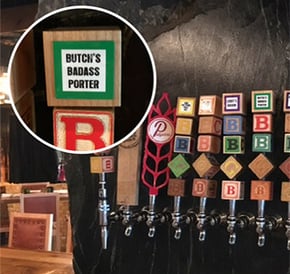 The way your brand shows up on on-premise tap labels is still a critical way to build brand recognition when your beer is poured into a glass rather than handed over in a can.
Brewpubs know the hassle of changing the entire tap handle every time a new keg is installed. Removable tap labels or using tap handle inserts allow you to quickly and neatly change the name and logo on each tap without replacing the entire handle, saving venues money and time during busy times.
How Many Different Labels Does a Craft Brewery Really Need?
Craft breweries require more labeling than they might expect, between bottles, cans, kegs, taps, and items like safety labels, promotional stickers, decals, and flight cards.
The good news: you don’t have to partner with a separate custom label printer for each one. A full-service custom label supplier should have the experience to handle all your beer labels — ensuring consistency across every format while simplifying your vendor relationships.
If you’re exploring how your beer labels can elevate your brand while staying in-budget, talk to an expert today.

 By: Lori Campbell, President
Lori Campbell is President of The Label Printers and a recognized leader in the printing industry, with more than 40 years of experience in sales leadership, operations, and strategic growth.
Since joining the company in 1982, she has advanced through roles across the organization, gaining a comprehensive understanding of customer needs, production, and business management. Appointed President in 2018, she helps oversee the company's strategic direction and long-term performance.
Lori has been a frequent speaker at industry events and served 14 years on the Board of Directors of TLMI, the leading trade association for the industry. She holds a Bachelor of Arts in Political Science from Eastern Illinois University.