
As of June 1, 2026, Extended Producer Responsibility (EPR) laws that require businesses to pay for the full life cycle of packaging are moving from initial policies to active enforcement in some states.
This means that businesses must now comply with the environmental standards included in the law or be fined up to thousands of dollars.
Uneven rollout is leaving some producers scrambling for answers with varying state-specific rulings, timelines, and fees.
Producer preparedness for ERP enforcement varies:
- From being unaware of the need to register their business
- To some consciously planning not to participate
- To those who are still working out how to comply
This article will provide procurement officers with clarity on how to prepare and stay compliant with the new enforcement rulings aimed at making packaging more sustainable.
At a Glance: EPR Rules Vary Widely — But Start Planning Now
Key Takeaways:
- EPR laws are growing, with actions introduced or passed in dozens of states.
- Fees are based on where your product is sold, not where it’s manufactured, and they vary by state.
- Harder-to-recycle materials incur higher fees, and fees are expected to rise annually.
- Labels are directly impacted and under increased scrutiny, including recyclability claims, material disclosures, and digital tracking.
- Starting the compliance process now — even if you’ve missed a deadline — reduces your risk of significant fines.
What Is Extended Producer Responsibility, and Who Is Impacted?
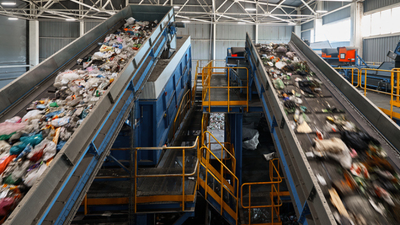 Extended producer responsibility (EPR) is a legal framework that holds producers financially responsible for the end-of-life management of their packaging. The goal of the legal framework is to incentivize companies to reduce the amount of packaging they use and adopt more sustainable options.
Currently, the United States generates more than 80 million tons of packaging waste annually, with recycling rates hovering around 50% for paper and cardboard but far lower for plastics. Investment to improve recycling rates is also important for materials that have inefficient collection and sorting processes, which will take time to scale.
Ultimately, the fees support an initiative to make all single-use packaging recyclable or compostable by 2032.
New ERP requirements: States will collect fees from businesses based on annual reports that disclose the types and amounts of packaging they use for their products. This shifts the financial burden of state packaging laws away from taxpayers and municipal services to businesses.
Fees vary by where the product is sold — not produced: The seven states with EPR enforcement currently in place include Colorado, Maine, Maryland, Minnesota, Oregon, Washington, and California — the state with the strictest regulations and standards and whose policies often have widespread adoption. Actions have already been introduced or passed in dozens of additional states, and more states are considering similar laws in the future.
ERP rollout has been uneven:
- Varying state-based requirements (including the definitions of packaging) and producer fees — even for the same product.
- Harder-to-recycle packages (such as metallic film) incur higher fees than those with low-density polyethylene.
- It’s expected that fees will rise each year.
While enforcement approaches vary, all states use at least one of the following mechanisms: sales restrictions, civil penalties, and public accountability. Oregon and some other states are demonstrating stricter enforcement of these policies by issuing delinquency notices to (and publicly sharing lists of) noncompliant producers.
Global enforcement for producers varies: Globally, more than 60 jurisdictions have already implemented ERP-like systems, including the European Union, which is now expanding rules under its EU Packaging and Packaging Waste Regulation and related Extended Producer Responsibility, later in 2026.
The variation in how enforcement is carried out in each jurisdiction makes it difficult to develop standardized compliance approaches for businesses that sell to those areas.
However, there are some exemptions to EPR laws, typically based around minimum revenue requirements, package type/size, etc., that manufacturers should be aware of.
Why (and How) Is EPR Changing?
EPR regulations in the United States are evolving quickly, with many states now enforcing the law. Here are the five biggest shifts procurement professionals need to understand.
From Registration to Enforcement: Many states are moving past the early “testing the waters” phases of EPR and initiating active oversight, audits, and enforcement actions against businesses. Some states, however, are still in the early stages of considering adopting EPR rulings.
Eco-Modulation of Fees: Fees are increasingly tailored through “eco-modulation,” with costs higher for materials that are harder to recycle, such as nonrecyclable plastics, and lower for sustainable, recyclable, or compostable materials.
Ernst & Young Global Limited recommends the following pathways for manufacturers to lower their ERP fees:
- Shifting from single-use to reusable or refillable materials
- Eliminating a plastic component altogether
- Modifying to use recyclable or compostable nonplastic materials
- Right-sizing materials (e.g., concentrating, light-weighting, shifting to bulk formats) to reduce waste
- Increasing the use of post-consumer recycled content (PCR)
Mandatory Reporting & Data Collection: Businesses that sell to states with EPR laws in place must submit detailed, SKU-level data on the weight and type of packaging they introduce to the market.
According to Recycling Today, data collection is one of the most difficult elements of regulatory compliance. With complex global supply chains and limited visibility, legacy systems like spreadsheets don’t capture the data needed to comply.
Stringent Requirements & Disclosure for Materials: Specific materials, such as expanded polystyrene (EPS) food service ware, face strict, performance-based bans if they cannot meet the state’s high recycling rate thresholds.
Shift in Financial Burden: Producers, instead of municipalities and taxpayers, will bear the responsibility for waste management costs in states with ERP laws.
How Does EPR Impact Product Label Requirements?
 EPR enforcement impacts product label requirements by mandating more consistent expectations of producers as the government moves toward equal regulations in how packaging waste is governed and funded.
These strong government signals urging producers to focus on eco-friendliness are already affecting packaging strategies across consumer goods, retail, and manufacturing.
EPR regulations reflect a product’s recyclability, material complexity, and collection difficulty of packaging formats. The higher the difficulty, the higher the fee. But according to Packaging Dive, early signals from the EPR program design suggest that packaging that has historically low rates of recycling will need to be redesigned or have its material choices substituted, which can also impact its overall costs.
Labels play a significant role in the sustainability of a product. With ERP, product labels may be further impacted by:
- Stricter recycling claims: Consumers have long loved recycling claims, but EPR systems now require stronger evidence to back up these claims via suppliers and internal systems, including more detailed material reporting and verification of full life-cycle, including how the product is disposed of.
- Material disclosures: Labels may need to more explicitly identify the materials used in packaging, particularly for items subject to eco-modulated fees, to enable accurate reporting and consumer transparency.
- Digital “passports” and QR codes: In the EU, digital product passports enable tracking records of a product’s material composition, repair history, and recycling instructions.
How Do I Get Started With EPR Compliance?
 Experts say that while ERP laws make compliance clearer, it is still remarkably complex to navigate if you’re strictly following regulations; the first step is to map your exposure and possible exemptions.
Reactively planning your materials is impractical, as it takes time to amend your materials strategy. Rather than just waiting to see, some companies are planning proactively based on the assumption that future packaging regulations will be as strict as the current regulations — if not more.
Even if you missed a registration deadline, it’s important to find out what each state report needs and start collecting and organizing your relevant data. Here’s how to get started:
Map your exposure and possible exemptions (varies state-by-state)
Document your fee exposure by the materials used in your product packaging, the amount of material, and the SKU. States designate varying revenue and volume thresholds, definitions of covered materials, and state-specific reporting templates. Packaging exemptions vary by state but may include U.S. Food and Drug Administration (FDA)-regulated products, beverage containers covered by deposit laws, packaging for long-term storage, and certain medical foods.
EPR fees due in 2026 include:
- Program fees: Volume-based fees to fund EPR operations (Colorado, Oregon)
- Start-up/early fees: Initial fees to fund program setup (California, Maine)
Register With PRO
Each state designates its own Producer Responsibility Organization (PRO), most of which are using Circular Action Alliance (CAA) to register producers, collect fees, and coordinate compliance. PROs aid compliance, but states are the ultimate enforcers of ERP regulations.
Audit your materials
Be able to list the components you use in your packaging, including their recyclability, compostability, and the amount you use in each unit. It may be required to submit a very detailed bill of materials that requires packaging specifications in a format required by the administering body.
There are three tiers of materials reporting, depending on the state requirements (below are requirements as of 2026):
- Annual: Detailed data on material types and weights (California, Colorado, Oregon)
- Simplified: Higher-level reporting by material class (Maryland, Minnesota, Washington)
- Start up: Initial reporting of total supply weight (Maine)
Understand and develop a reporting cadence
Because regulations and fee programs differ across states, businesses that sell the same product across states cannot submit the same report in each state, and many states have staggered reporting dates. Some require a material breakdown, while others do not.
Build EPR compliance into the design process
Prioritize recyclable, lightweight materials, and consider moving to a reuse and refill system. Companies must also integrate compliance into their ongoing operations, including adding in budgetary line items for ERP fees and related administrative compliance.
Don’t fret if you feel like you’re behind; compliance experts say that just beginning the process and registering your business helps reduce your risk of incurring significant fines early on. The sooner you can identify your liability and find ways to offset compliance costs, the less disruptive ERP will be to your business. PricewaterhouseCoopers estimates a 6% to 25% revenue uplift for those who redesign packaging and control costs.
With unclear expectations and major risks of noncompliance, sustainability award-winning The Label Printers offers producers expert counsel to help them navigate eco-conscious procurement and alternative materials that meet regulations while keeping budgets under control.